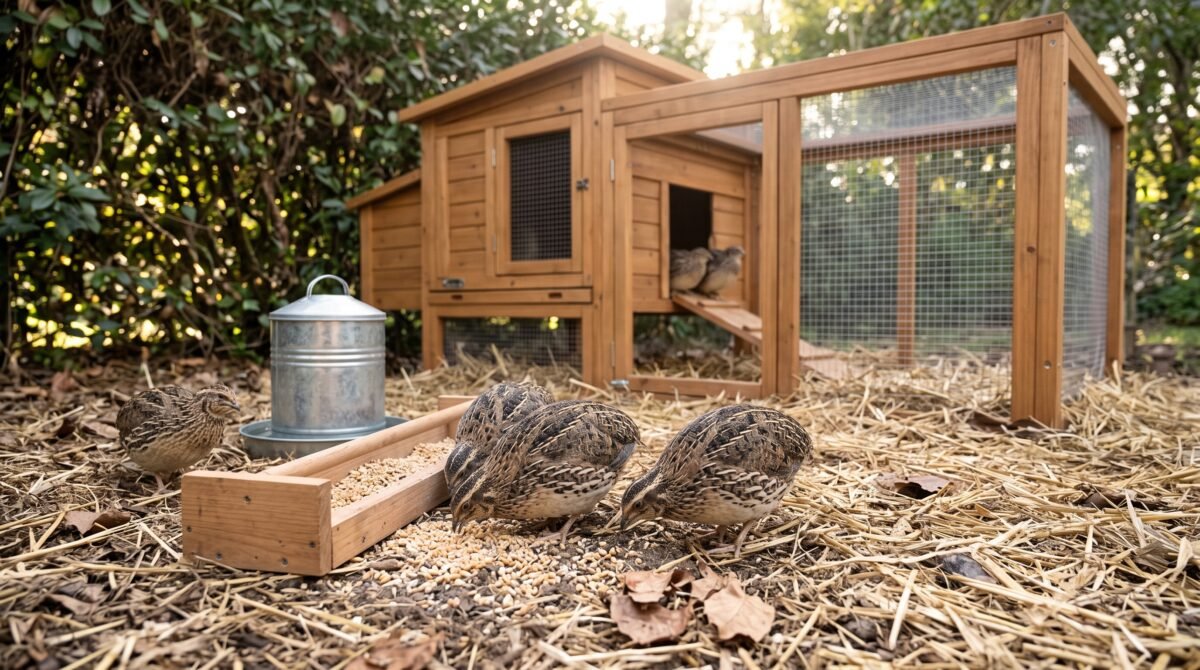
Raising quail as a beginner comes down to a handful of decisions: start with Coturnix quail, give each bird about a square foot of dry, draft-free space, feed a high-protein gamebird ration, keep chicks warm in a proper brooder, and check your local rules before you buy a single bird. Get those right and you can be collecting eggs roughly two months after your chicks hatch.
I’ve kept quail for over three years, and the thing that still surprises new keepers is the speed. Coturnix eggs hatch in 17 to 18 days, and the hens often start laying at six to eight weeks old. That pace is great for learning because you see results fast. It also means mistakes show up fast, so a little planning at the start saves a lot of heartache.
Below, I walk through the whole path: rules, breeds, housing, supplies, feed, brooding, eggs, and health. Each section points to a deeper guide when you want the full details.
These are the numbers I check against whenever I help someone plan a first flock:
| What you’re planning | Beginner target |
|---|---|
| Starter breed | Coturnix (Japanese) quail |
| Floor space | About 1 square foot per adult bird |
| Chick feed | Gamebird starter, 26–30% protein |
| Brooder temperature | 95–97°F in week one, then drop about 5°F each week |
| Adult feed | Gamebird or layer feed, roughly 18–22% protein |
| First eggs | 6–8 weeks of age |
| Light for steady laying | 14–16 hours a day |
| Incubation | 99.5°F in a forced-air incubator, 17–18 days |
Check your local rules first
Before you order chicks or hatching eggs, find out whether quail are allowed where you live. Rules differ by state, county, and city, and some places treat quail as game birds, which can come with extra requirements. If you rent or live under an HOA, read that paperwork too.
I put together a state-by-state look at quail laws so you know what to ask. Your county extension office or city zoning desk can confirm the details for your exact address.
Start with Coturnix quail
Coturnix, also sold as Japanese quail, are the beginner’s bird. They mature quickly, lay early, and forgive the small errors every new keeper makes. They also hatch faster than bobwhite quail, which need about 23 to 24 days.
They work for eggs, meat, or both, depending on the line you buy. Larger “jumbo” lines were developed for the table, while standard-size birds are often the pick for egg laying.
If you’re curious about other varieties, my guide to quail breeds and color types covers the options, and the Coturnix care overview goes deeper on the one I’d start with.
How many quail to start with
Start smaller than you think you should. I’d rather you begin with six to ten hens you can watch closely than twenty you can’t. A small flock keeps your cleaning and feed costs low while you learn what normal looks like.
Hens lay without a male around, so you only need one if you plan to hatch eggs. In that case, keep one male for every four or five hens. Put more hens than that under one male and he can over-mate them, which leads to stress, feather loss, and injuries. My breakdown of starting flock size for eggs, meat, or breeding helps you match the number to your goal.
Housing and space
I aim for about one square foot per bird. Stacked production-style cages push that to two or three birds per square foot, and extension guidance for meat birds tops out at three per square foot after six weeks. Crowding is the usual root of feather pulling and pecking, so when in doubt, give them more room.
Whatever you build or buy, it needs to be:
- Dry and draft-free, with enough ventilation that ammonia doesn’t build up
- Predator-proof, with wire small enough that neither chicks nor raccoons can get through
- Low enough that a startled bird can’t launch itself into the ceiling
- Easy to clean, because you’ll be cleaning it often
- Set well away from chickens, wild birds, and rodents
Quail are ground dwellers, so a rabbit-hutch style cage, a stacked cage system, or a walk-in pen all work. My guide to cage space per bird walks through the math for your footprint, and the housing overview for cages, hutches, and aviaries compares the main styles.
Supplies you actually need
Quail need less gear than chickens, but a few items are non-negotiable:
- A feeder that keeps feed off the floor
- A waterer small enough that chicks can’t drown in it
- A heat source for chicks
- A thermometer for the brooder, incubator, and coop
- A light on a timer if you want eggs through winter
- An incubator, if you plan to hatch your own
Quail love to scratch feed out of open dishes and waste half of it, so a no-waste feeder that hangs on the cage pays for itself quickly. A digital thermometer with a probe lets you check the brooder, incubator, and coop without guessing. The full supplies checklist covers the rest.
What to feed quail
Quail need more protein than chickens at almost every stage, and this is where beginners most often go wrong. Standard chicken starter usually falls short for quail chicks, so look for a gamebird or turkey starter instead.
Here’s how feed changes as the birds grow:
| Age | Feed | Protein |
|---|---|---|
| Hatch to about 6 weeks | Gamebird or turkey starter | 26–30% |
| 6 weeks to adulthood | Gamebird grower | Around 20% |
| Laying hens | Gamebird layer or breeder | Roughly 18–22%, with added calcium |
Grind the starter to a fine, cornmeal-like texture for the first week so tiny beaks can eat it. Skip scratch grains for chicks, since they can slow growth and push out the nutrition the starter provides. Fresh water should always be within reach.
For the complete picture, see my guides on what quail eat at every age and what to feed baby quail week by week.
Brooding your chicks
A Coturnix chick can weigh under 10 grams at hatch, and chilling or overheating is the fastest way to lose one. Texas A&M’s extension guidance is a solid reference for the basics, and it lines up with what I do:
- Set up early. Have the brooder clean, warm, and stable a day or two before the chicks arrive.
- Start hot, then step down. Aim for 95–97°F at chick level the first week, then lower it about 5°F each week until the birds are fully feathered.
- Use a grippy floor. Wood shavings work well. Never put chicks on slick surfaces like newspaper, plastic, or cardboard.
- Corral them the first week. A brooder guard keeps chicks close to heat, food, and water.
- Make water drown-proof. Use a shallow waterer and add pebbles to the trough for the first week.
- Watch the chicks, not just the thermometer. Chicks piling up under the heat are too cold. Chicks hugging the far edge are too hot. Comfortable chicks spread out.
Radiant heat is hard to read with a thermometer, so chick behavior matters even more if you use a plate. A low-voltage brooder plate avoids the fire risk that comes with a hanging heat lamp, and Coturnix chicks take to one without trouble. For the full timeline through week six, see my guide to raising quail chicks from brooder to grow-out.
Eggs, light, and hatching
Most Coturnix hens begin laying between six and eight weeks old, according to Mississippi State’s extension feeding guide. At peak, a healthy hen lays close to an egg a day, though real-world numbers vary with feed, stress, and light. My breakdown of how many eggs quail lay goes into the details.
Light is the lever most beginners miss. Hens need roughly 14 to 16 hours of light a day to keep laying steadily, so when the days shorten, a small light on a timer keeps production from falling off.
If you want to hatch your own, most Coturnix hens won’t reliably sit on eggs, so plan on an incubator. A tabletop incubator with an automatic turner and a small-egg insert is a gentle way to learn. Forced-air machines run at 99.5°F, and Coturnix hatch in 17 to 18 days. The step-by-step incubation guide and the temperature and humidity reference cover turning, lockdown, and hatch day.
Daily care and keeping quail healthy
A good routine takes about five minutes. Each day I check that feed and water are clean and full, collect eggs, and look the birds over. A quail that stands apart from the flock, fluffs up, or skips the feeder is telling you something.
Quail catch many of the same diseases and parasites as other poultry, so prevention beats treatment. These habits do most of the work:
- Keep chickens, wild birds, and rodents away from the quail
- Clean waterers daily and remove wet or spilled feed
- Remove dead birds right away and separate any that look sick
- Get a diagnosis before you medicate, ideally from a vet
If you see pecking or feather loss, look first at crowding, ventilation, and lighting. Giving birds more floor space, softening the light, and tossing in some leafy greens or hay to peck at often calms things down. My health and care guides cover specific problems as they come up.
Mistakes I see most often
- Starting too big. Twenty birds in a space meant for eight is the quickest route to stress and disease.
- Feeding chicken feed. Quail need the higher protein of a gamebird ration, especially as chicks.
- Using a slippery brooder floor. Chicks need traction to avoid leg problems.
- Skipping winter light. Egg production often drops when days get short.
- Mixing quail with chickens. Shared space means shared diseases.
Frequently Asked Questions
Can quail live with chickens?
I keep them separate. Quail are small and easily bullied, and they can pick up diseases that chickens carry. A separate pen, ideally set well apart from other poultry, is safer for the quail.
What do I do with the extra males?
If you hatch eggs, you’ll end up with about as many males as females. Extra males can be raised for the table, since Coturnix reach processing size in roughly six to eight weeks, or kept in a separate all-male pen. Housing them apart from the hens also prevents over-mating.
Are quail quiet enough for a suburban yard?
Hens are quiet, and they lay without a male. Males crow, so if noise worries you or your neighbors, keep a hens-only flock and skip hatching.
Your next step
If you remember one thing, make it this: let your space decide your flock size. Measure the area you have, allow about a square foot per bird, and buy Coturnix chicks or hatching eggs for that number. Feed them a gamebird starter, keep the brooder warm, and give the hens enough light, and the rest tends to fall into place.
What’s the biggest question still holding you back from getting your first quail? Leave it in the comments, and browse the Getting Started section for the next guide in the series.
